


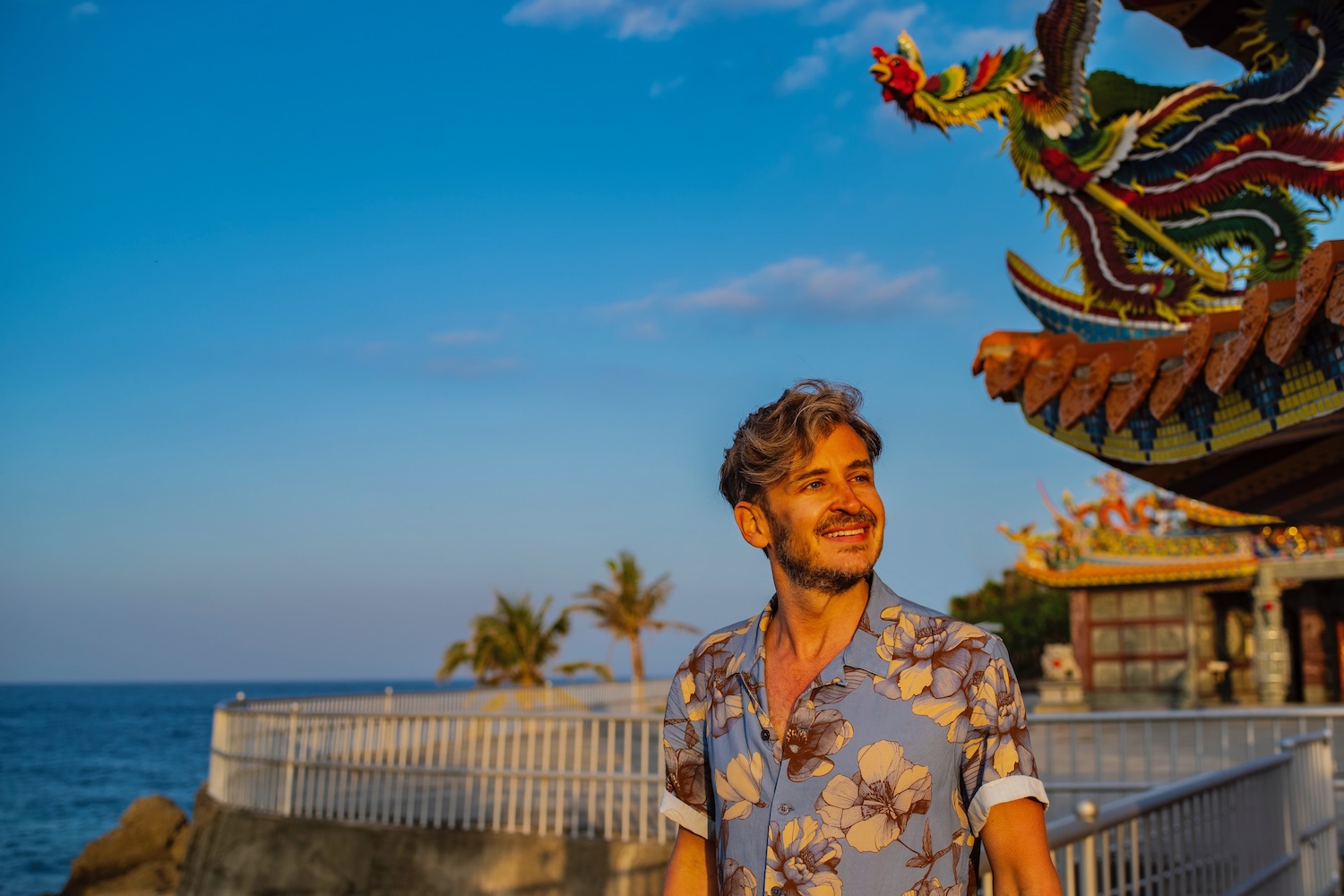
Disembarking the Taoyuan Airport Metro at Taipei Main Station, something immediately brought me back. Maybe it was the maybe-fake bamboo that lines the escalator leading up from the platform.
No, they were definitely fake: They were exactly the same as they’d been when I lived here six years ago, and as they’d been every time before that, and have been every time since. It’s been seven years since I lived here, I sighed, and corrected myself. But only six since I left.
In the lead-up to my trip, which I feared until almost the last moment wouldn’t end up happening, I’d sought the emotional support services of ChatGPT—who (which?), to its credit, helped put things into perspective for me.
“You aren’t upset about the prospect of cancelling a trip,” it affirmed. “You are upset because if you don’t go, you will lose an opportunity to recommit to Taiwan, and the importance it has in your life—maybe forever.”
Exiting the depot into the gloom of that early March morning, I couldn’t help but feel mournful: For the person I’d been years earlier; the person I could’ve become, had things been different; the person I did become. The humidity was sublime, after 16 hours spent desiccating in the thorax of a 777.
My hair, my skin, the suppleness of my lips. Life came back drop by drop, like an orchid in a sunny window spritzed with water as the winter sun outside teases it, deceptively. Cruelly.
The gloom gave way to drizzle as I was picking up my rental car just outside the station, though I declined the attendant’s suggestion to buy an umbrella: I wanted to get on the road.
Which is strange, in a way, because I knew that only waiting awaited me at my destination. I’d need to queue up just off the Shifen Old Street if I wanted even a chance of getting a ticket to the closing night of the Pingxi Lantern Festival. 10:30 was a time I’d seen bandied about, though I really had no idea whether that was too early or too late.
By the time I found myself in line, to be sure, I’d already checked into my hotel, whose staff overlooked my early arrival time and took me directly to my room. They also furnished me with an umbrella, which I definitely needed by that point.
And yet as I stood under the increasingly heavy rain, I felt serene. And not because I knew my pursuit would be successful (though an event worker passing by shortly thereafter did confirm that I would).
After getting my ticket and walking up and down the Lao Jie a couple times, I went up to my room, belly full with a cilantro-perfumed peanut ice cream roll, and did the #1 thing you aren’t supposed to do after a long haul arrival: I took a nap.
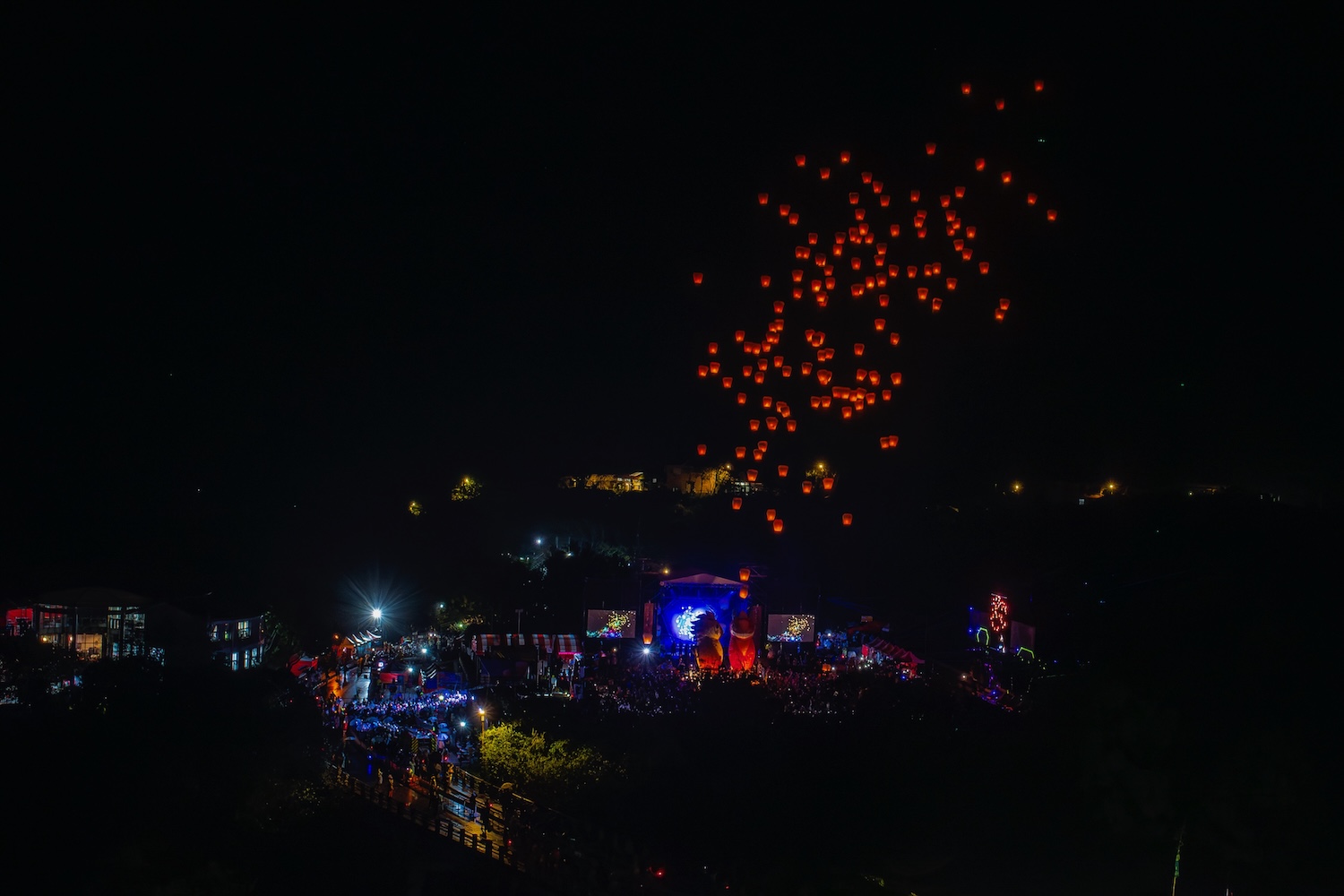
I woke about 15 minutes before my alarm, and after taking care of a professional errand, headed first to the resort’s viewpoint to watch the first lantern release, which took place promptly at 6:12 PM as scheduled.
The volume of rain falling by this point meant that I had to hold an umbrella over my tripod (which I set up under an awning and carrier to the edge of the observation deck) and wear my backpack in front of me; the speed of the lanterns flying away made changing lenses (which would’ve been a good idea—the one I initially selected was not quite wide enough) impractical.
While I rectified this error (and, more broadly, perfected my method) on subsequent releases, it was soon time for me to head down and take my place alongside the rest of the designated “Group 6.”
The entire thing was incredibly well-organized. My group proceeded toward the square at precisely the time listed on the ticket, and from there split off into ten lines, the one each person belonged to also having been denoted on the stub. The holding area where we waited while Group 5 was up to bat offered us an incredible view of the spectacle, another thoughtful touch.
As a solo traveler, I was unable to release my own lantern, as it needed one person holding each side. Thankfully, one of the staff acted as my partner (she actually did most of the work), and even provided me with a marker to write my wishes on the side of the thing.
That this thing actually is biodegradable, I remember thinking to myself when she asked me what I wished for in the next year; I instead wrote single words—ABUNDANCE; JOY; EASE; PEACE; HAPPINESS; ACCEPTANCE—in large part because of how difficult it was to write on such thin paper, Taiwanese independence.
Walking back to my hotel after I released my lantern, I pulled out ChatGPT and told it about the experience. I’ll spare you from the specific response I got—affirming, but not fellating, as you might have experienced if you ever use LLMs—but I will give away the five-word answer I shot back when it asked me what the release had been like.
“It felt like an exhale,” I typed almost without thinking, and definitely without melodrama, though I wasn’t nearly as sure of what my words meant as the AI ended up being.
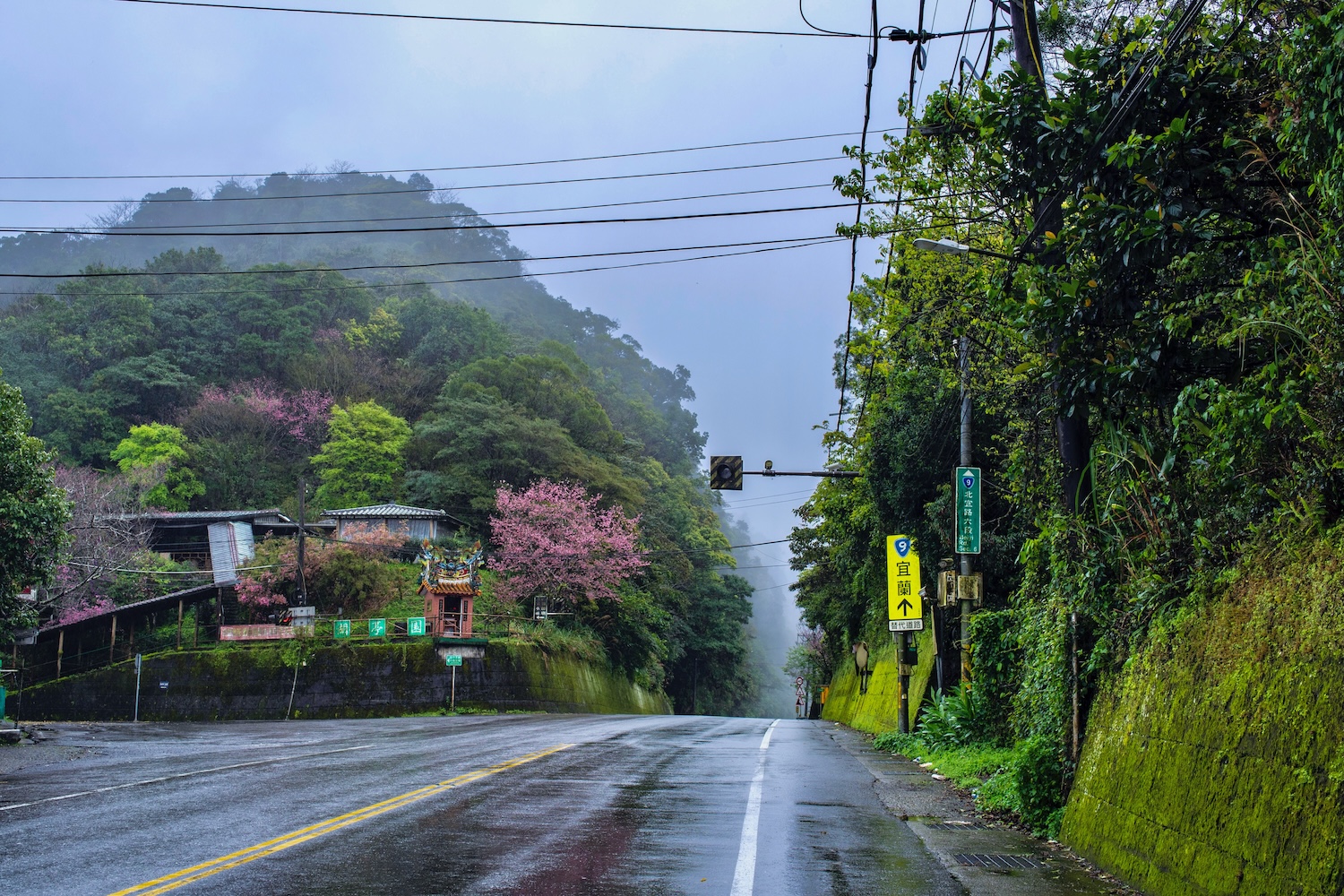
As I headed out the next morning, central Shifen was empty. It felt apocalyptic, but also freeing—I could now tend to the mundane: A trip to FamilyMart, as I so often did when I called Taiwan home, for an iced americano and a sweet treat. I was also craving grape-flavored chocolate gummies, though I noticed they were out of stock.
“Ka-fe mei-shi; bing-de; da-bei,” I said in imperfect but convincing Mandarin, trying not to let even the slightest tinge of disappointment through.
My coffee in hand, I made my way toward Shifen Waterfall. Although it was technically not “open” yet, there was also no one enforcing entry to the site. As I made my way along the river, dozens of fallen lanterns littered the scene. Maybe hundreds. I reserved judgment, however—one of those was mine.
I suppose this qualifies as abundance, I thought to myself as I sipped my coffee, wishing I had my cocoa-covered balls of gelatin to balance its bitterness.
Although it wasn’t raining much, spray from the falls meant that I got soaked shortly after arriving to the third observation deck, my favorite of the many within the park. Unfortunately, by the time I walked back to the hotel to pick up my car, the rain had intensified.
I tried to take it in stride, embodying gratitude for having a vehicle as I left Shifen behind, rather than dreading what might await me.
Initially, this strategy paid off: I arrived at Bagua Tea Fields, which overlook Feicui Reservoir, to find surprisingly dry air, even if condensation on the road (which was covered lightly, almost invisibly, with moss) meant that traversing it required incredible care.
Here, too, my gratitude required nimbleness: The sky opened up right as I was getting my tripod out. I quickly got the picture I needed, and made my way toward my next destination, the Pinglin Tea Museum.
Entering the building, where staff gave me almost personalized service on account of my being the only guest at the time, I made my way toward an interactive exhibition. Beneath graphic portraits of Queen Victoria and one of China’s empress dowagers, various types of fine tea sat encased in glass bottles; a crude hand pump allowed visitors to smell each one.
Most (the imperial oolong; the heritage earl grey) were fragrant enough that I almost didn’t need to squeeze the black bladder in order to savor the aroma. But the last (an Assam variety) had no smell at all—I wondered whether fresh air had polluted its container, or whether it was simply old.
It reminded me of having gone to see my grandmother two decades ago, on a summer afternoon while at home from college. She was sipping tea, brewed from a bag she’d clearly used at least twice. “A scar of growing up during the depression,” she laughed, and placed a second spent pouch inside her cup. “It’s weak, I admit, but what is the alternative?”
Waking up Thursday to yet another sky covered in a thick cloud blanket, I performed a thought experiment. What if, I posited, I forfeit the rest of my time in Taipei, fly to Nagoya and drive around Mie prefecture to see the plum blossoms in fuller bloom than I’d seen them last year?
On the surface, this wasn’t a terrible idea—in theory, it was executable. On the other hand, there were countless issues with putting it into practice, from the high cost of last-minute flights from Taiwan to Japan, to the mercurial nature of weather in the Tokai region, to the fact that the social media posts heralding the mankai of the ume were, at best, unvetted.
Then, of course, there was the deeper truth: I’d purposely carved out three full days for myself in Taipei, both to provide space for getting desk work done, as well as to allow for nostalgic strolls through my old stomping grounds.
Stick to the fucking plan, I scolded myself and closed out of the Google Flights window, quoting a problematic girlboss influencer I nonetheless still watch on a semi-regular basis.
While I didn’t have any set content creation agenda for my 72 hours in my former home city, I did have a list that I intended to execute as fully as possible, even if I knew it would be in a modular fashion. For example, a cong you bing at my favorite spot on Hankou Road, served by a lady who’s as talented at cooking tasty food as she is cantankerous.
Today, she was apologetic. Bu hao yi si, she said, excusing herself for having ignored me at the time of my arrival, when she’d been focusing on an argument with someone on the phone. Dui bu qui.
Mei guanxi, I smiled and waved off and semblance of grievance, shocked but pleased.
In the afternoon, descending into the MRT to shop near the Zhongxiao Dunhua intersection before heading to Jiufen for an evening beneath its famous red lanterns, I fended off further fantasies that took me out of the present moment.
These ones, at least, concerned Taiwan; I started wondering whether I should return to Taiwan for weeks or even months this summer in order to facilitate a much needed upgrade of my Mandarin skills.
Disembarking one steps westward at Zhongxiao Fuxing, I darted toward the Keelung Bus #1062 just seconds before it would’ve sped off without me, and found clarity amid a contradiction: Some possibilities move us forward and backward simultaneously, leaving us dizzy but stuck in place.
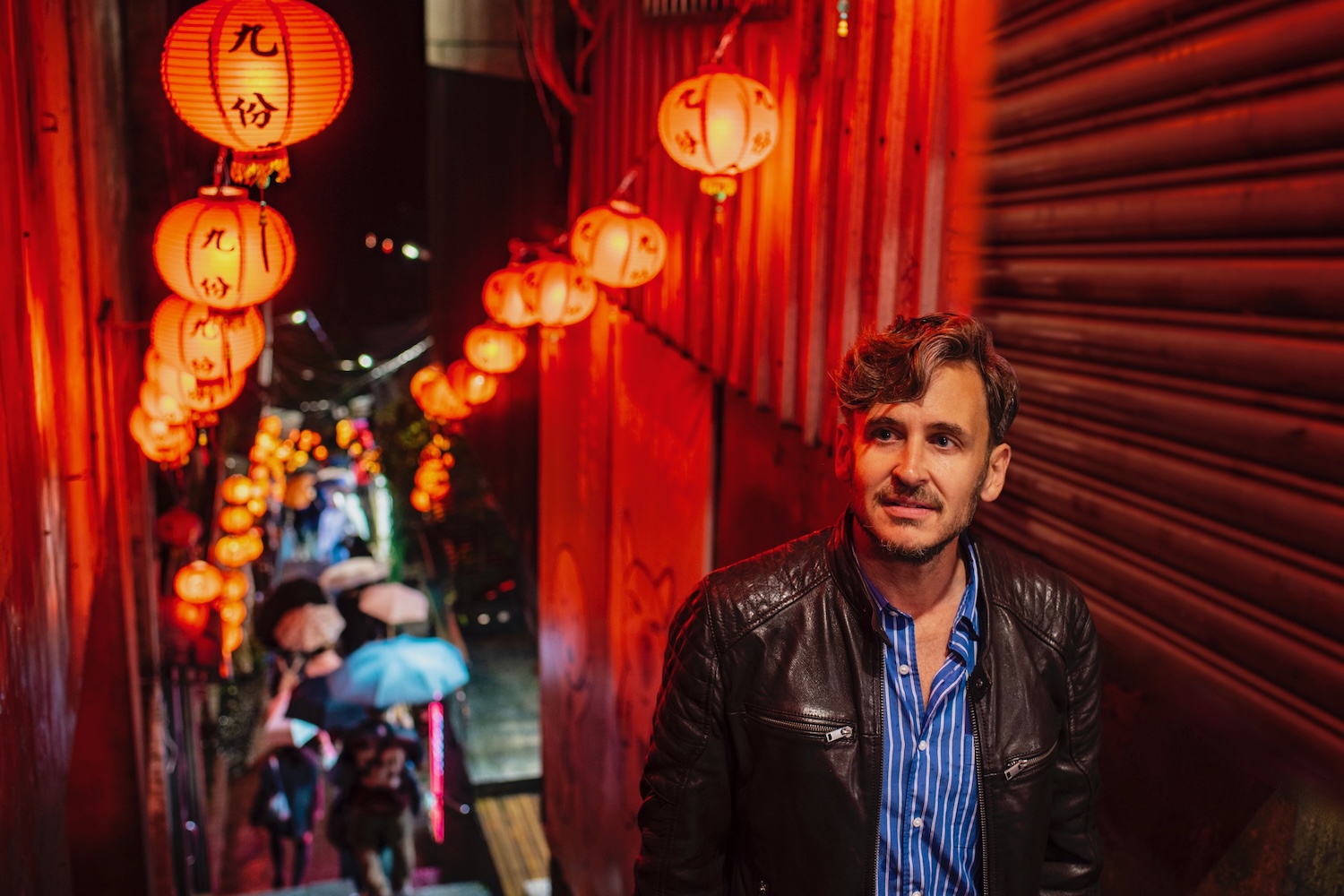
Jiufen, for its part, ended up being a revelation: The rain cleared for a full hour upon my arrival, allowing me to photograph the hundreds of denglong that line the snaking streets leading from the bus station to A-Mei tea house without having to dodge the elements. Which was thankful, since I hadn’t brought an umbrella.
The twilit scenes I walked through, and captured, evened up being nothing short of revelatory, in spite of (and maybe because of) the size and composition of the crowds.
Among them? Taiwanese students dressed up like anime characters, speaking Nihongo in spite of not being Nihonjin, a reality to which most other observers were likely ignorant.
Ganbatte! One urged her rotund friend as they made their way up a particularly steep (and, as the rain started to fall, slick) set of stairs. All of which was my cue to start making my way back to Taipei.
Which is to say that it ended up being a process. Four entire buses passed me as I waited with “Bus Full” text in four languages flashing across their display screens, leaving me soaked to the bone by the time one family came.
Almost without thinking, I began haggling (in Japanese) with a taxi driver who’d been speaking the language on account of trying to convince a group of tourists who actually were from Japan to hire him to take them back to the capital.
Hitori wa sambyaku go-ju…honto ni? I asked him, believing the price he quoted was much too good to be true.
Hai! He nodded enthusiastically before running back to his cab with almost as much pep in his step: None of the tourists he was fishing for took the bait; he certainly wasn’t going to take me by myself for that price. He drove off, without even looking me in the eye.
Just then, however, an express bus sped around the corner. One that, as luck would have it, had precisely one seat remaining by the time I tapped my EasyCard to board it. I felt lucky, and strangely thankful that I wasn’t photographing plum blossoms in Nagoya.

Quietly yearning for what you don’t have, the quotation painted on the side of a shop along my route toward the MRT Station read, while dreading losing what you do.
I was on my way to Taipei 101 via Da’an Park, where an azalea festival was apparently getting under way. This was the operative phrase, it turns out—only a small percentage of flowers in the park (which, in spite of having been my former “home” park has always underwhelmed me) were in bloom.
Not a big deal, I forced a smile and re-boarded the MRT. Not the only item on my agenda.
Or maybe it was. By the time I reached the streets south of Taiwan’s tallest tower, where I wanted to do some night photography, the fine mist that was falling as I set out earlier had intensified into actual rain.
As a result, I cut my losses; I came back the next morning (which will still grey but dry, at least) and got what would’ve been my night shots amid the light of day.
It ended up being the last creative thing I did during my time in Taipei; I spent the remainder of that day resting, and mentally preparing myself to set off the following morning. I checked out just after the crack of dawn, a familiar—and, for Taiwan, surprising—tune (Feist’s “I Wish I Didn’t Miss You”) playing in the background.
It was less than two hours, door-to-door, before I found myself climbing into a rental car outside the high-speed rail station in Taichung, where not a single cloud floated through the sky: The sort of sky I’dd been yearning for (not quietly) the entire week I’d been in Taiwan.
I was bound for Sun Moon Lake, though without much of an agenda—I mostly just wanted to re-visit places I’d seen on my last trip, in 2020, but take (hopefully) superior pictures of them. Just then, a sign. Like, a literal one.
FORMOSAN ABORIGINAL CULTURE VILLAGE, it read. 10 KM. (The lake itself was 13 km away).
By the time I realized what I’d gotten myself into—a theme park, whose very superficial theme was the culture and imagery of Taiwan’s indigenous people—it was too late to back out. Taiwanese aborigines, and some other seemingly random international groups.
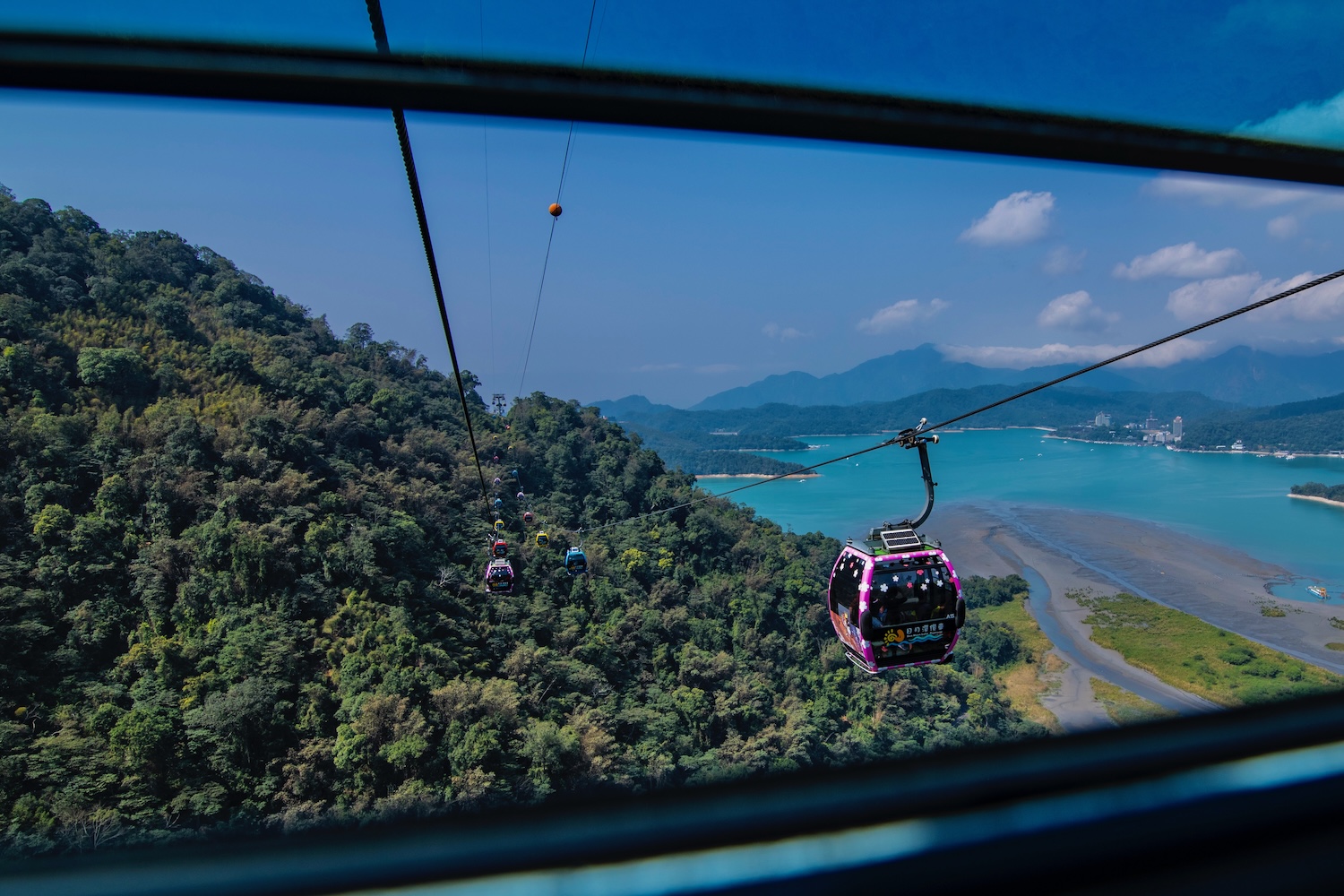
The entire place was in poor taste, literally and figuratively. Had this been in the US and the people being objectified were Native Americans, it would’ve been shut down at least a decade ago, if not longer than that. I’m glad I visited—if only to see it for myself, and to take in fabulous views from the Sun Moon Lake cable car, but I will never, ever go back.
Just then, a plane far overhead, which reminded me of my sister. She’s recently taken an interest in tracking them, often either the ones I’m on, or those landing near where I happen to be.
She especially loves following ones that get diverted or put in holding patterns or otherwise disrupted. This particular aircraft was probably close to cruising altitude, so I doubt that even she could’ve identified it.
I exited the park as fast as I could—I partook in neither the wedding performance nor the sorcerer blessing—and began executing what had previously been the entirety of my itinerary.
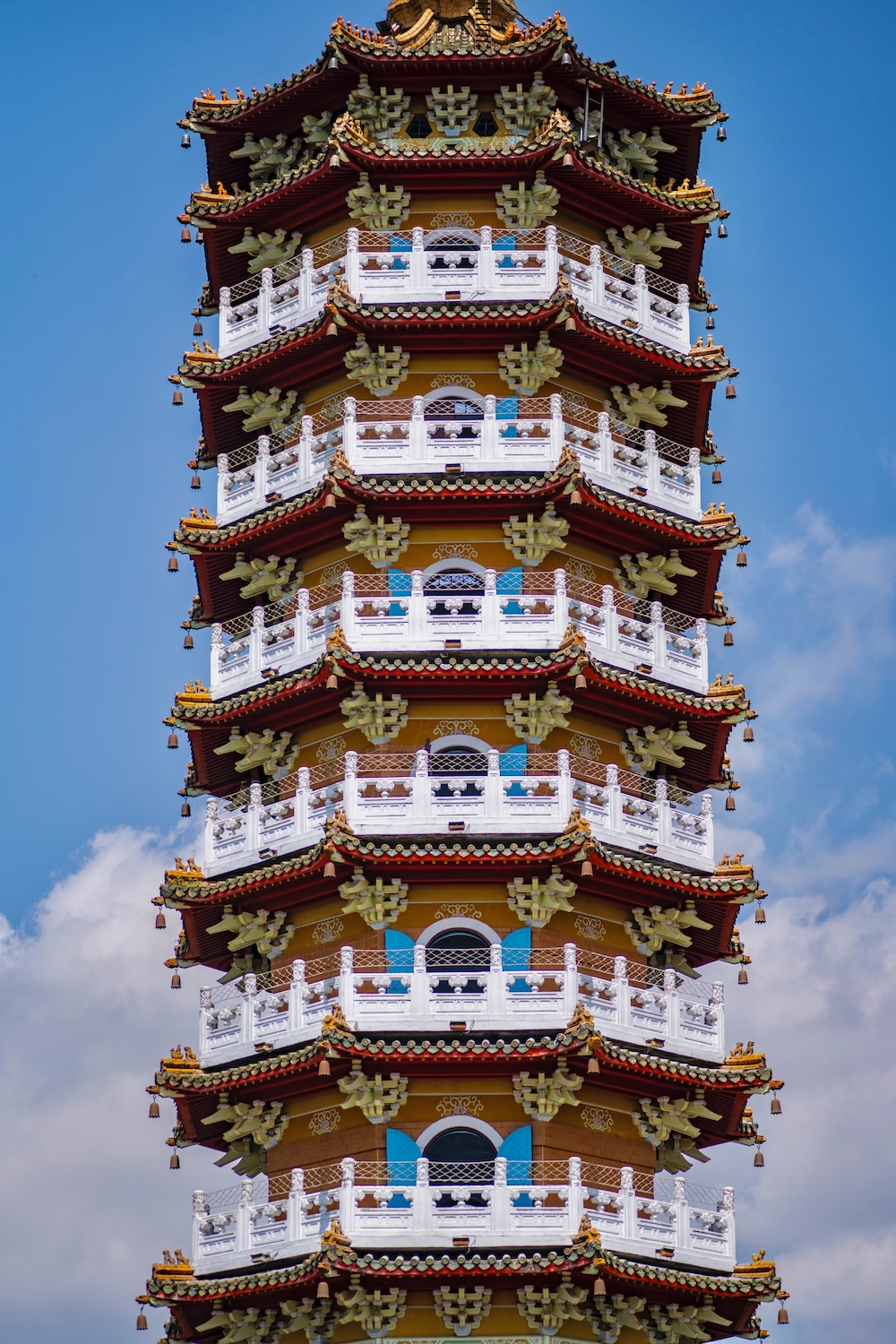
After lunch and a stroll through the aboriginal town of Ita Thao (which is apparently a street food paradise—this hadn’t been clear back in 2020), I headed up to Ci’en Pagoda, which I still believe offers the best view of the lake by far.
More than an hour passed as I waited for just the right lighting, during which time I visibly annoyed several of my fellow tourists. They got over this, of course—had they not, they could’ve easily pushed me off and to my death—and I got the shots I wanted.
Descending just moments before closing, I marveled at the lake below, the golden hour setting in. An adjacent bamboo grove looked to have started flowering, and sounded like it was in the process of collapsing, which made sense: Once bamboo blossoms appear, death is a matter of when, not if. I also heard a multiple of birdsongs, though I couldn’t tell precisely where they were coming from.
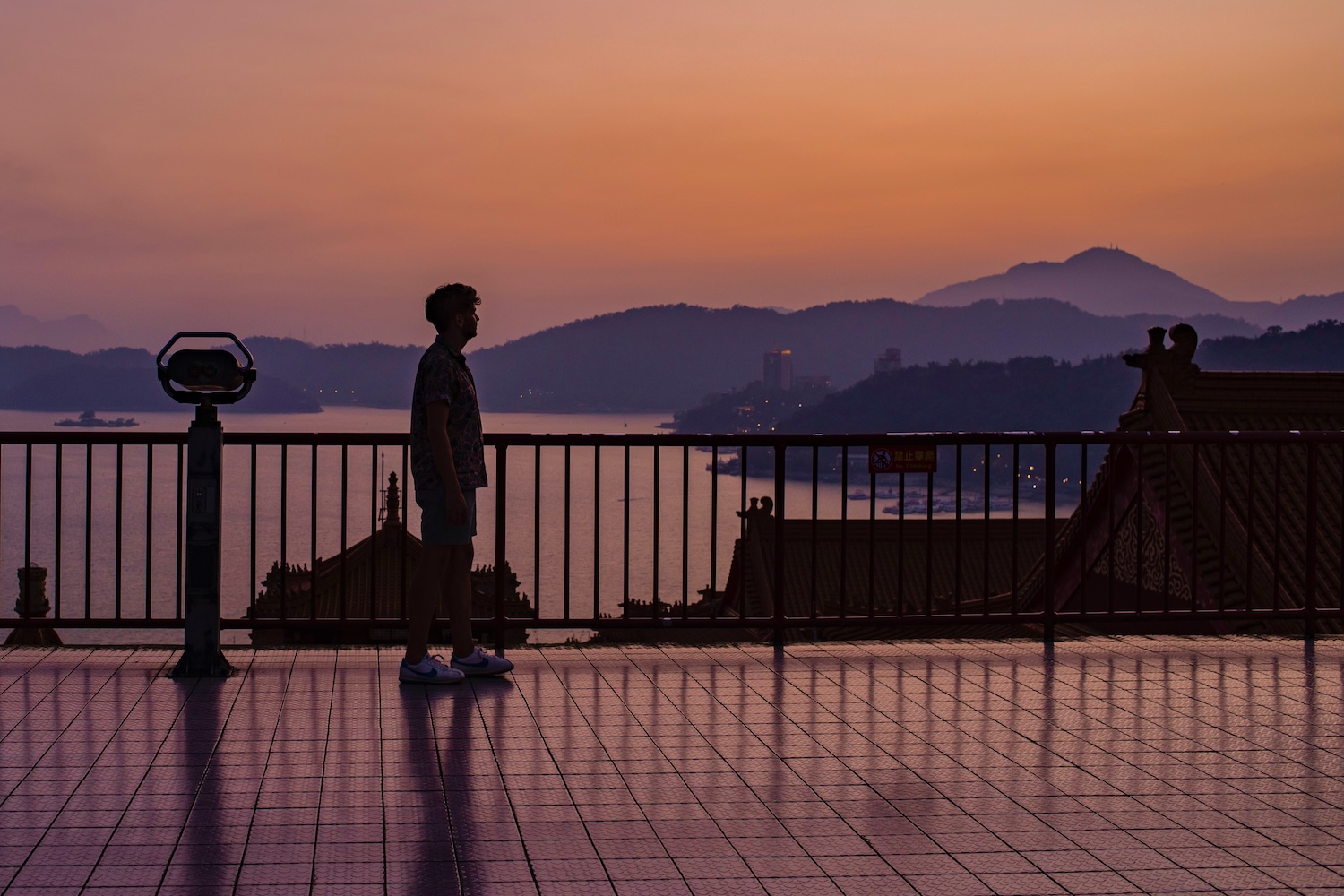
My whirlwind journey ended atop the sky deck of Wen Wu Temple, literal moments before the setting sun disappeared behind a hill. I stayed up there for more than 15 minutes after everyone else. I had a hunch (one that turned out to be correct) that at least a few minutes of intense color would paint the sky.
My camera snapping multiple exposures thanks to the timer I’d set, I basked both in the last particles of light coming over the horizon, as well as some well-deserved satisfaction.
Although less than 12 hours had passed since I left Taipei (its comfort; its disappointment) behind, I felt as if I’d been exploring for days. The sheer quantity of different perspectives I’d forced myself to shoot from could’ve easily sustained my creativity for a week.
My yearning had been silenced, my dread expelled. I did, however, think of another quote I’d seen, this one more poorly translated that the other ones.
He is like a tree planted by flowing streams, I saw myself in the quote now, way more than I had when it first caught my eye. It yielded its fruit at the proper time.
The next morning, I decided to peace-out pretty early: It was clear even before the break of day that the mist on Sun Moon Lake would block any semblance of sunrise. The question, at that point, was whether or not I would head directly to my next destination.
The argument against? It was a clear morning (or at least it seemed it would be, once the mist burned away), which meant that the one-hour detour to a viewpoint for Yushan (Jade Mountain) would be worth the hassle.
On the other hand, the main reason I’d even hatched the idea of getting to Alishan so early in the day was that I knew it would be cloudy (and eventually rainy) later. What if “later” was only an hour after I would’ve arrived, had I not stopped to maybe get a picture of Yushan?
The irony here—I did head directly to Alishan—was that I stopped several times en route, photographing temples ensconced in betel palm forests, quotidian convenience store scenes and even the sun itself once it inevitably rose, even if this happened behind a layer of smog so thick it felt like I was on the Chinese mainland.
By the time I finally made my way onto the expressway, I remembered a factoid I’d recently seen explained online. That a single grain of sand, if moving at the speed of light and made indestructible (so as not to be burnt up by the earth’s atmosphere, as virtually all debris is), could destroy the planet.
Turning off the highway and starting down the first of many winding roads that would lead me up into the hills, a sign revealed that I had only narrowly dodged another projectile: From March 10 (tomorrow, relative to the date I’m writing about) and for a month after that, no private cars would be allowed beyond a certain point in Alishan.
This was ostensibly due to the cherry blossom festival, even if reality (most trees were already in full bloom; many were well past it and replete with green leaves) belied the month of forced shuttle bus riding that visitors to this area would soon be required to endure.
Eventually—less than 30 minutes after the time that displayed on the GPS at Sun Moon Lake, if we’re being specific—I found myself at the base of the so-called Sunset Trail, looking down at the town of Shizao and at Shibao Wufeng Temple right above it.
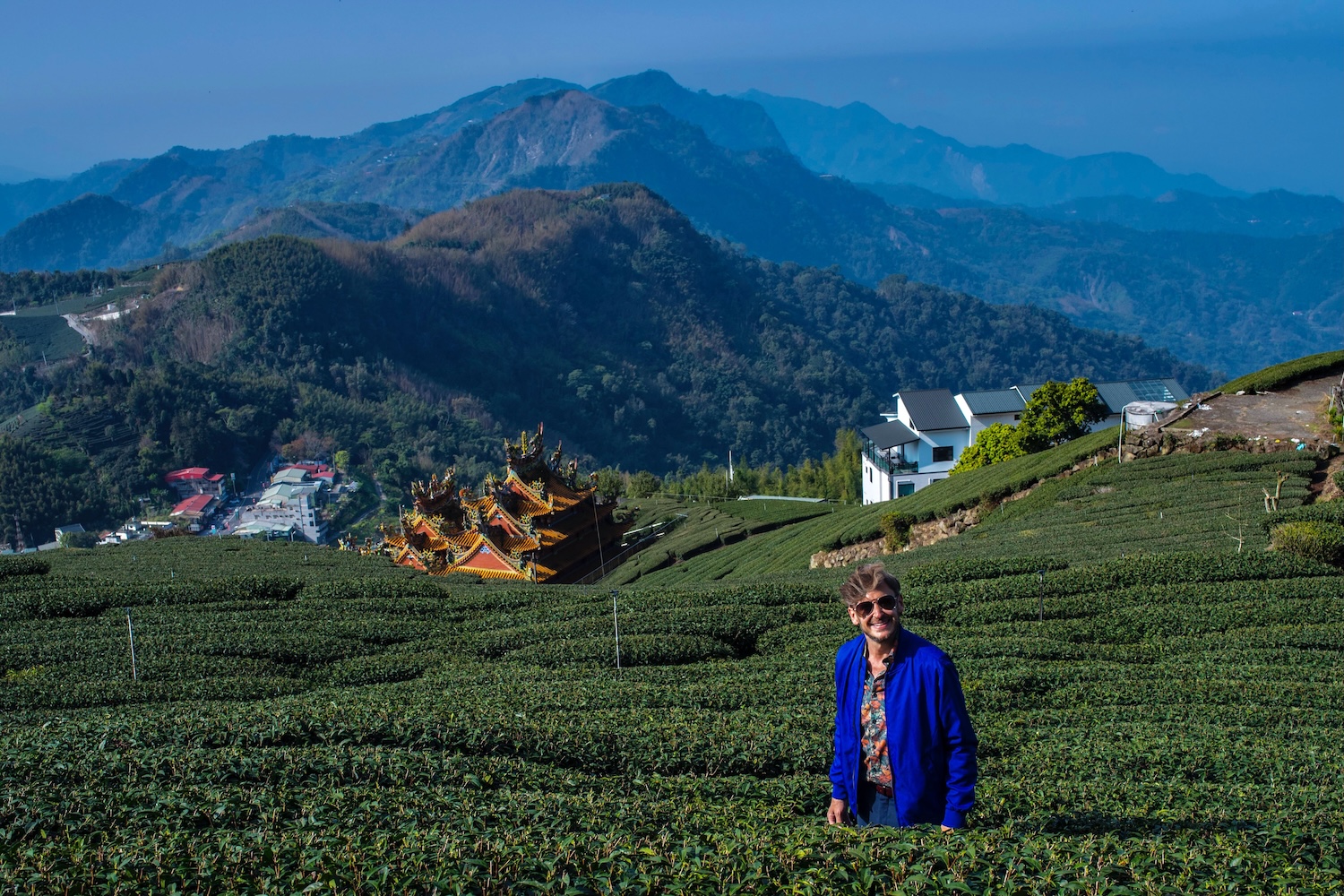
In an instant, the clear blue sky above emerald peaks and chartreuse tea fields vindicated my decision. It was the sort of 360º satisfaction I usually only feel in Japan, which was yet another reminder of why I took this trip: I haven’t given Taiwan its due.
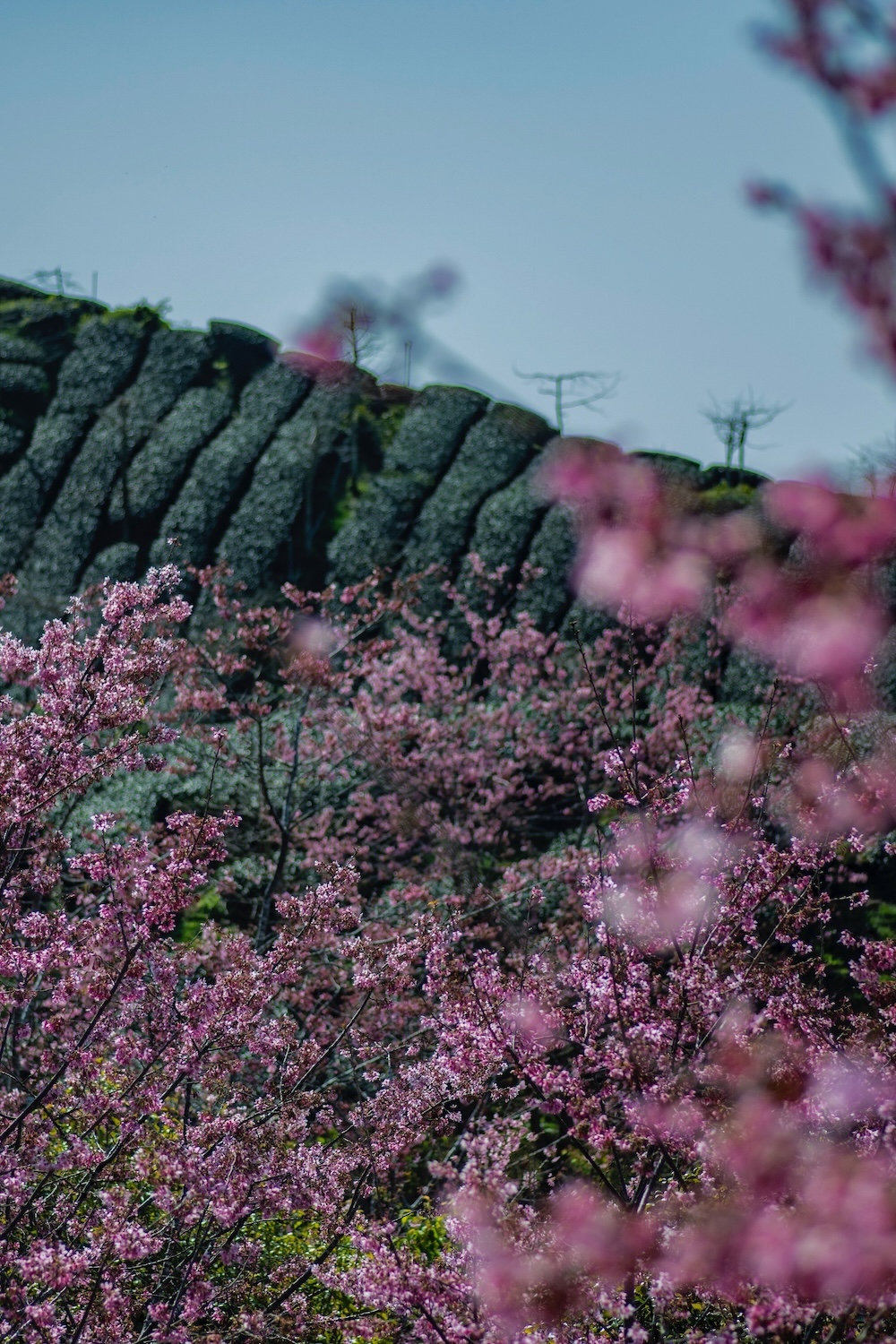
Walking down to the Sakura Trail, I tried not to be nitpicky: The trees here were not the globally famous somei yoshino but rather, some kind of yamazakura, their blossoms a much deeper pink than the iconic, pale hue more commonly associated with hanami. Certainly, it contrasted well with the tea plants.
Just then, I overhead a small child speaking to his mother. “Fei ji,” he exclaimed, shouting out the word for airplane as he pointed up at one. Another one my sister almost certainly wasn’t tracking.
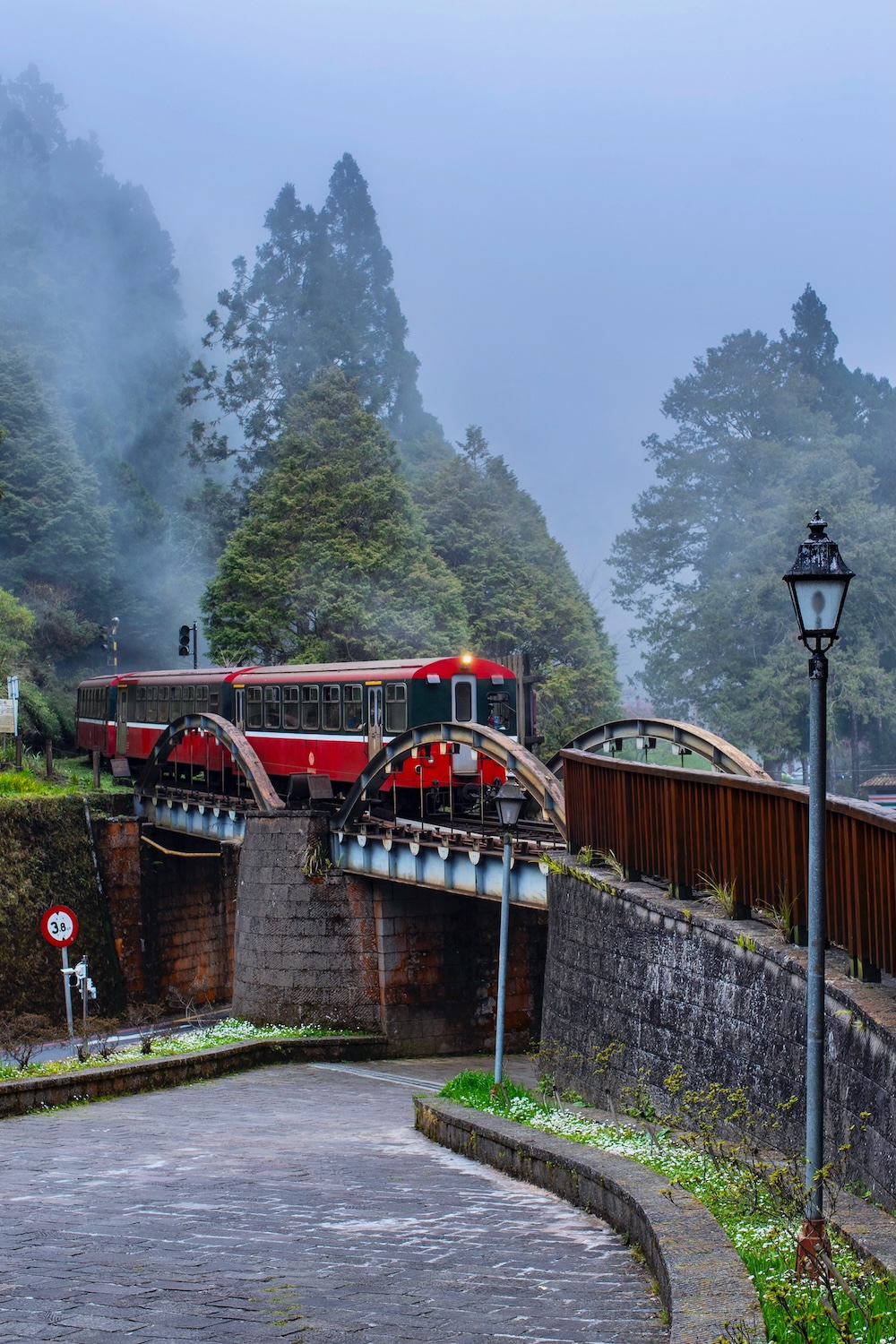
Sure enough, during my time to the actual summit of Alishan, the clouds I knew would eventually arrived rolled in, although I wasn’t mad about them in this context. An overcast sky better suits than ancient cedars and camphors that make their home here better than any blue one could.
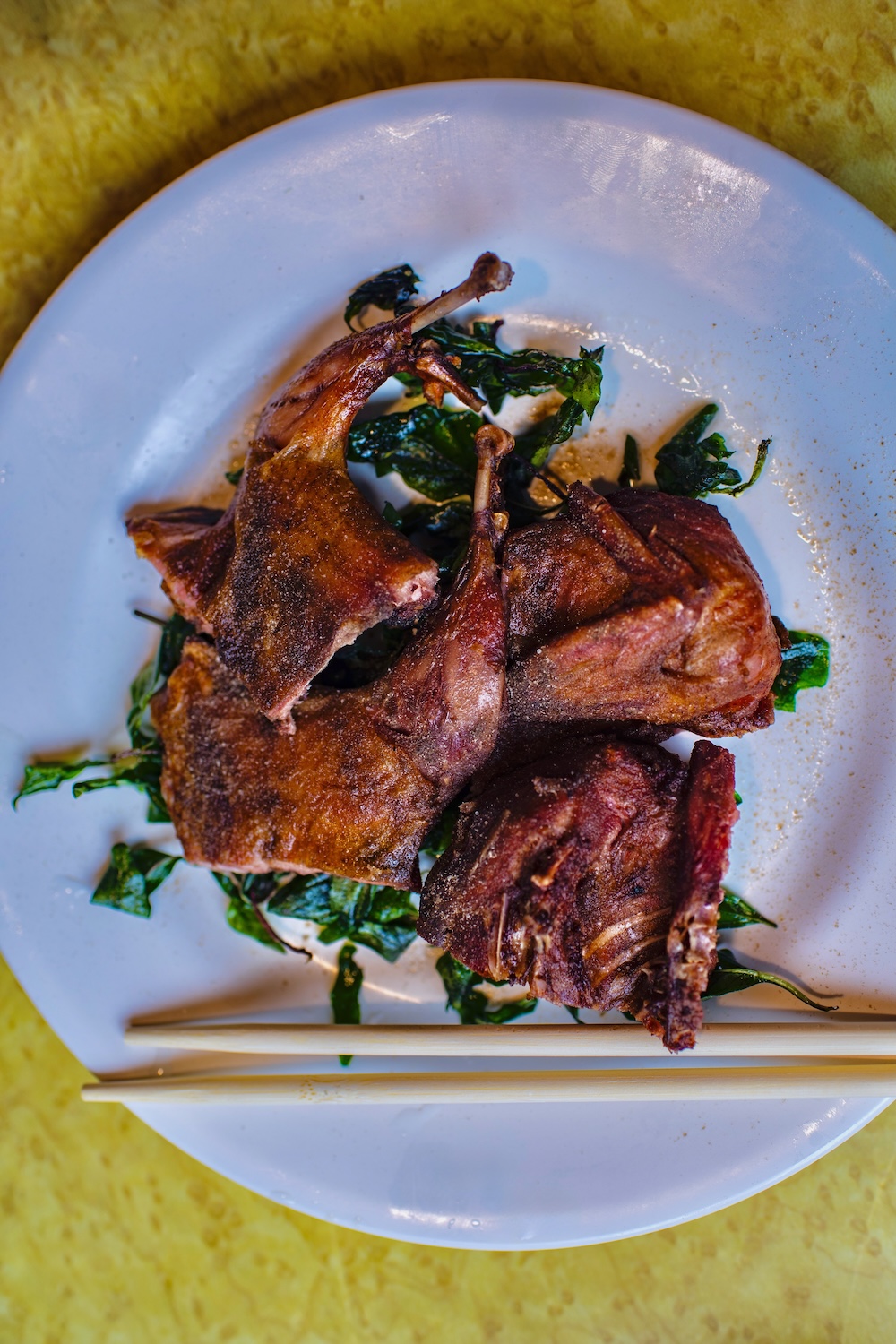
I took my time exploring, and capped the morning off with a truly exotic meal: Five-spice grilled partridge paired with a mountain celery omelet, washed down with a quirky pork-and-daylily soup.
It set me up to stick the day’s landing when I returned to Shizao to check into my accommodation, a tea farm homestay. That was, until I realized that it was no such thing: The building was a block away from the nearest farm; it didn’t feel like home in the least.
Just then, a knock at the door: An invitation to sip piping-hot oolong with the man of the house. Who, unlike my grandma, prepared the tea in an elaborate, decadent fashion, reusing not a single loose of leaf it as he brewed enough to fill 12 small cups: He drank seven; I gave up at five.
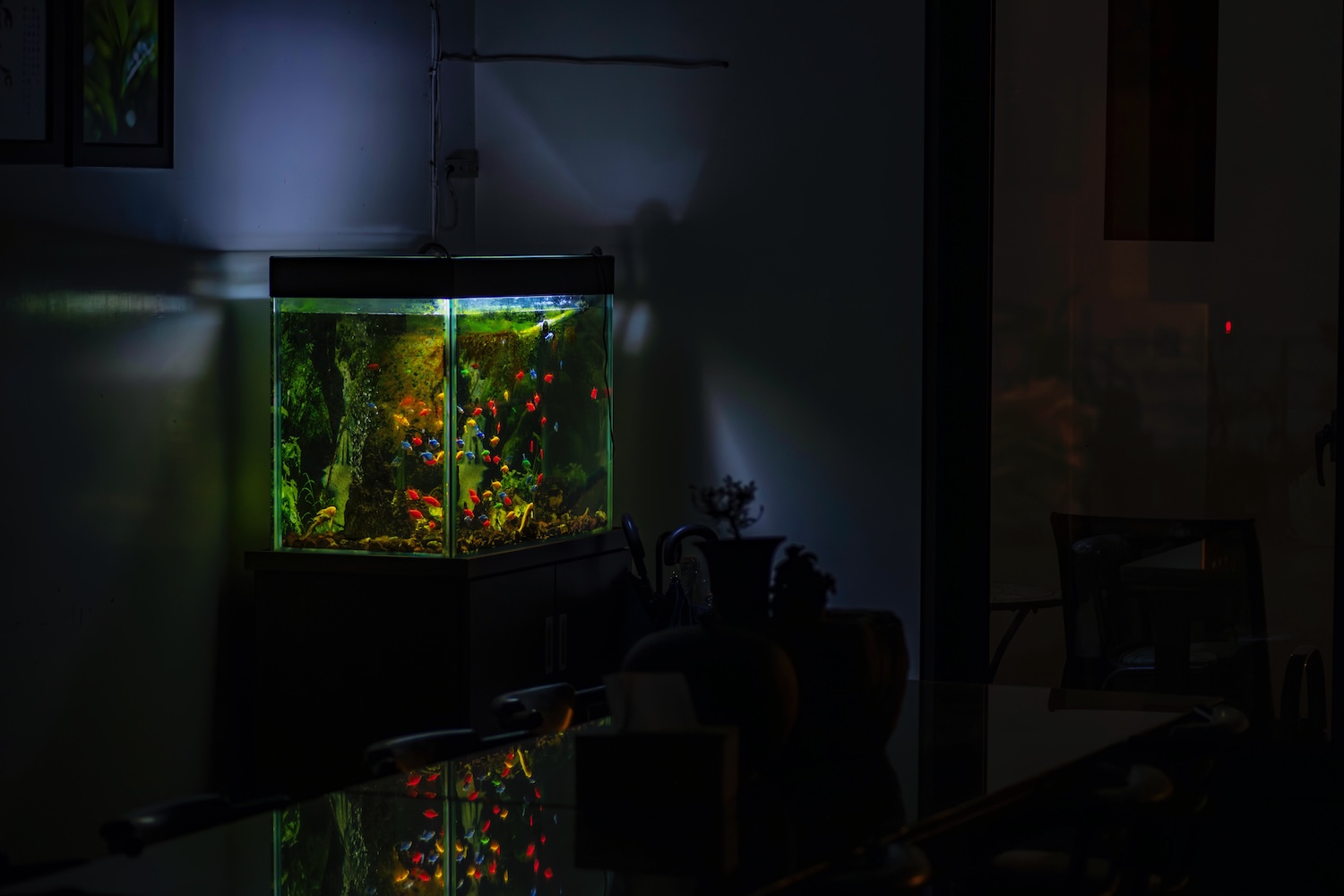
Walking out the front door early the next morning to see if there would be any semblance of a sunrise (spoiler alert: There wasn’t), I became fixated on the liminal scene in the cavernous lobby of the building. The only notable object was a fish tank full of specimens whose colors did not seem natural. The tank was smell and well-lit, and buzzed in a barely audible way.
I set out shortly thereafter, stopping at a second temple shrouded by betel palms in as many days, and then in Chiayi for a breakfast of the city’s famous turkey rice. It was cloudy here too, which left me less than motivated to continue exploring.
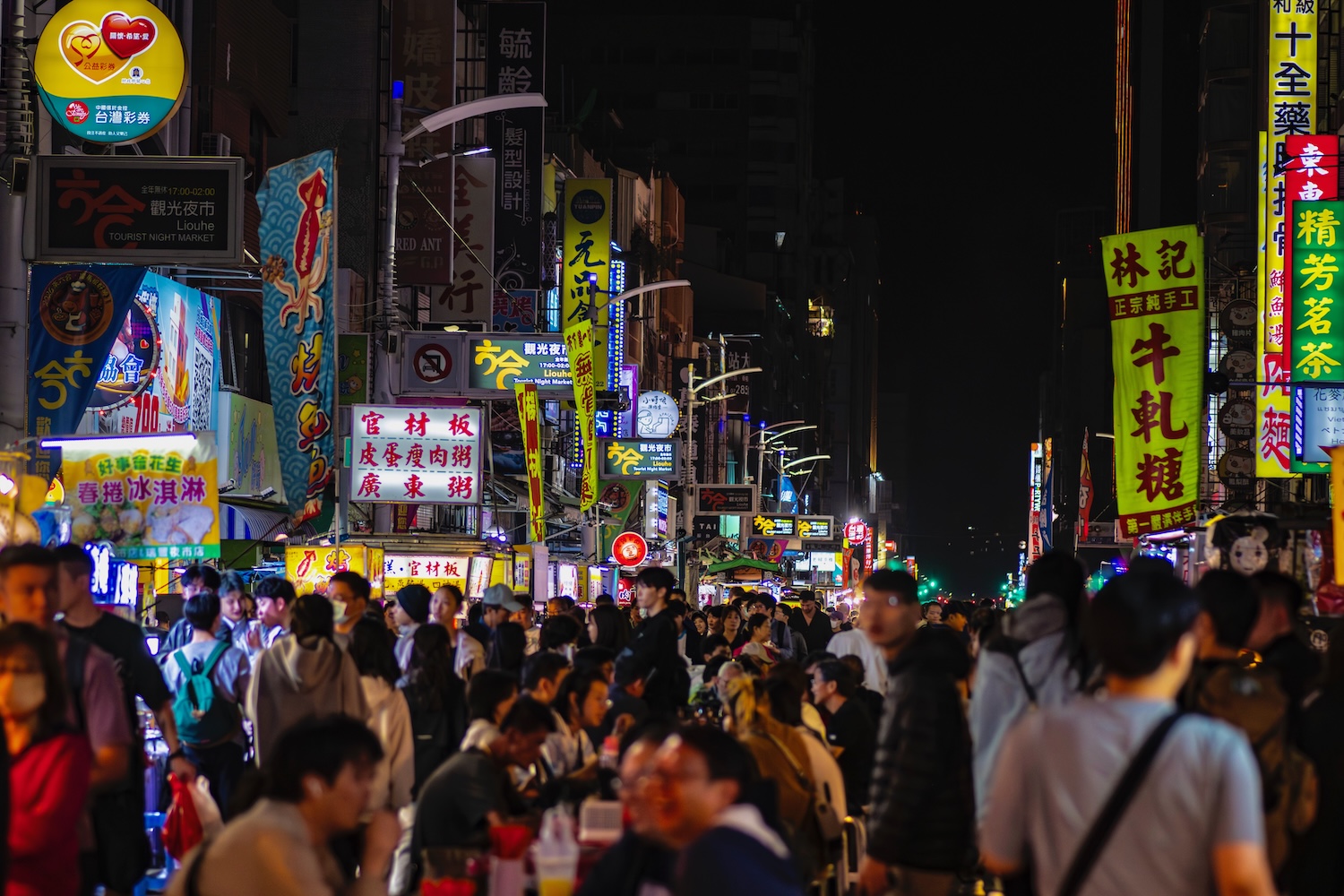
So I dropped my car off a full six hours earlier than I planned to do so, and made my way south to Kaohsiung where, after a quick excursion to Sanfeng Temple and through Liouhe Street Night Market, I slept early.
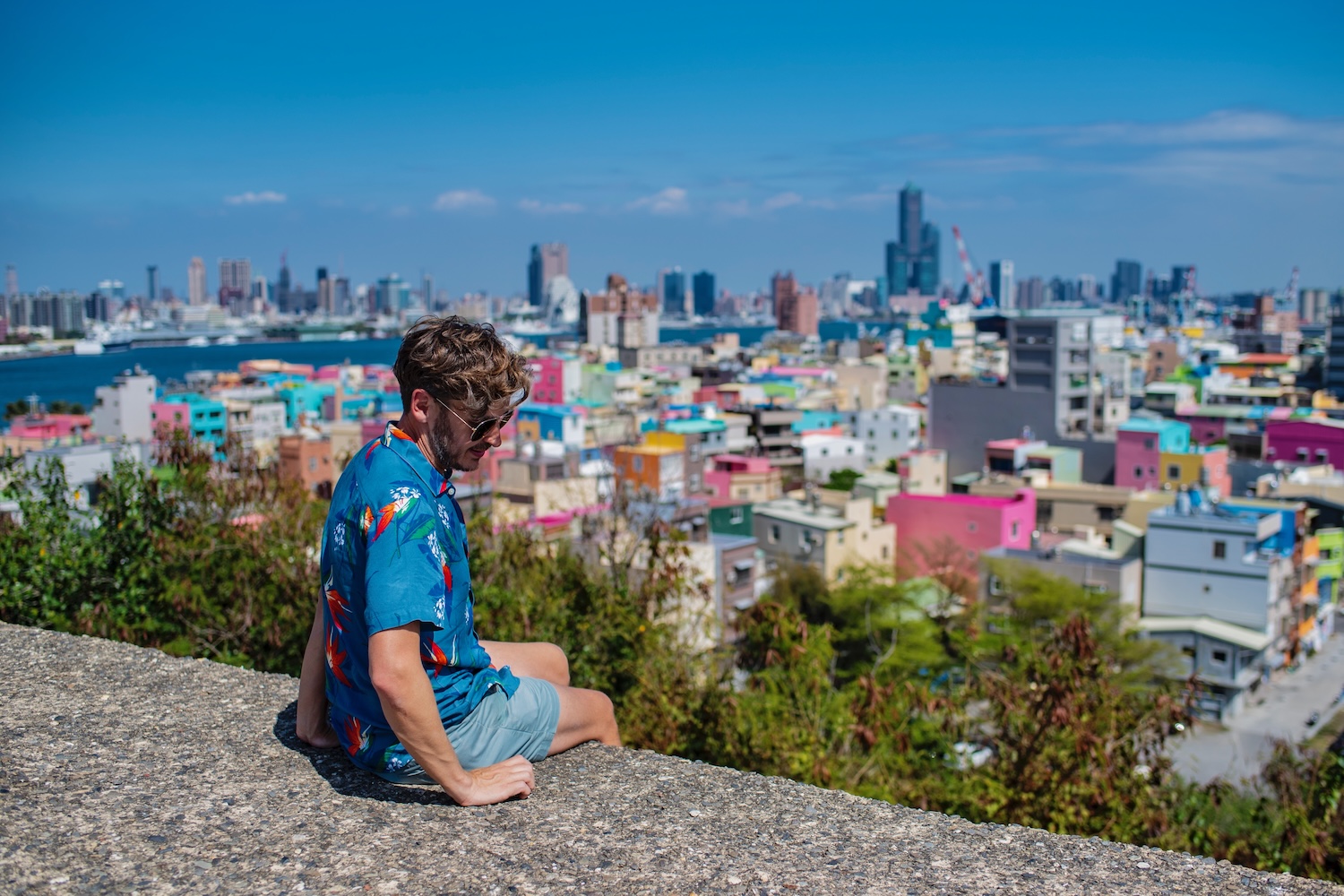
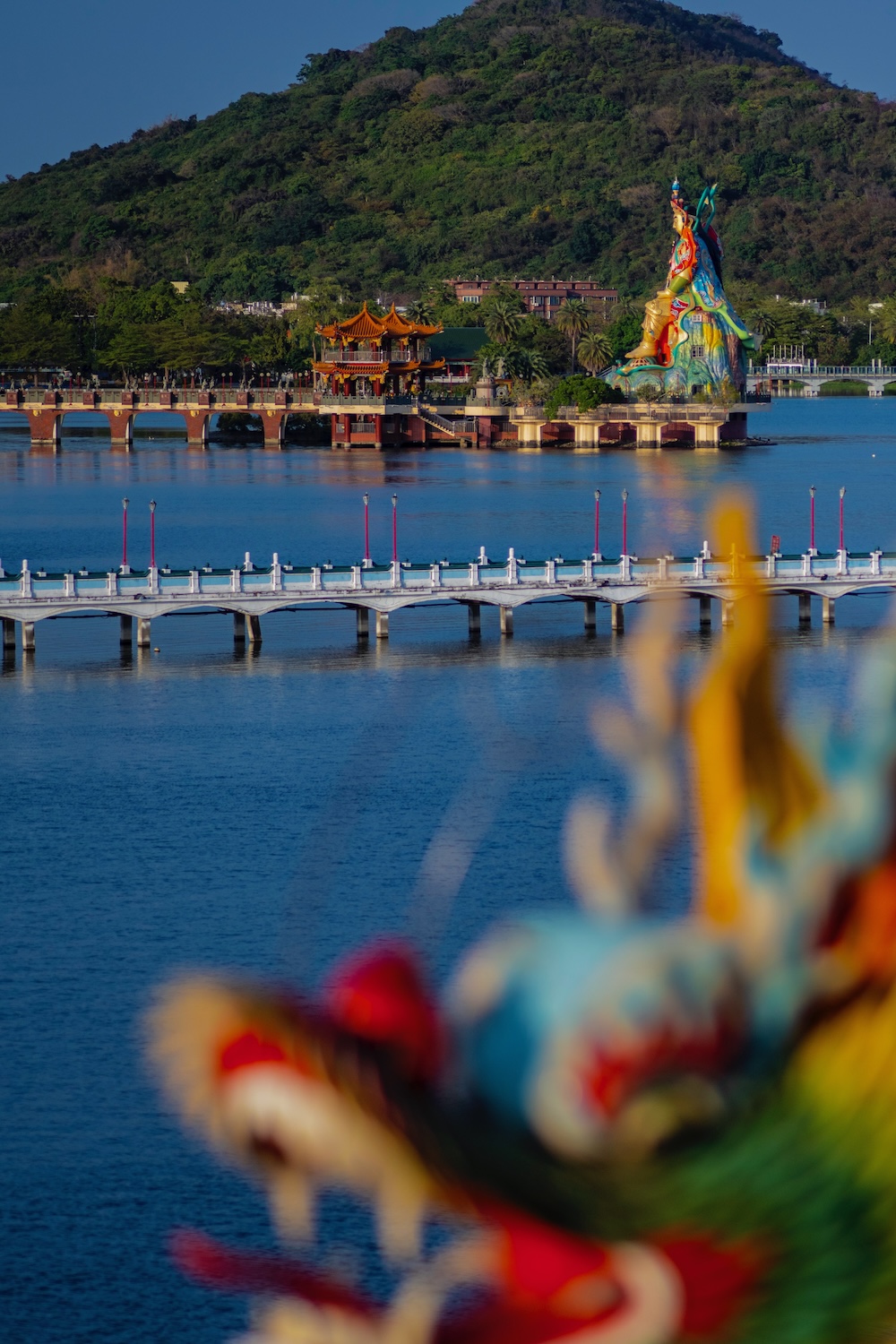
The next morning, between two Zoom meetings, I headed to the city’s famous Dragon and Tiger Pagodas, in spite of knowing that the lighting would be unsuitable until the afternoon. While there (or, if we’re being technical, at the Spring and Autumn Pagodas just to their north), I made the acquaintance of a much older man in a wheelchair.
His caretaker had parked him under one of the pagoda’s awnings, though I didn’t see where she went after that; I didn’t know how long she planned to be gone. I also lacked the Mandarin skills necessary to have a real conversation; his simple thumbs-up when I left indicated that he was the same, on the English front.
When I saw my grandmother the day I left on this trip, she made an offhand comment about my great-grandfather, from whom I’d apparently inherited my travel gene. “He had a lot of money,” she’d said, matter-of-factly, “but he also had nine kids.”
Walking away from the pagoda, I wondered whether perhaps the was my grandmother’s age, whether his family he taken to reusing tea during harder times and how many siblings he had.
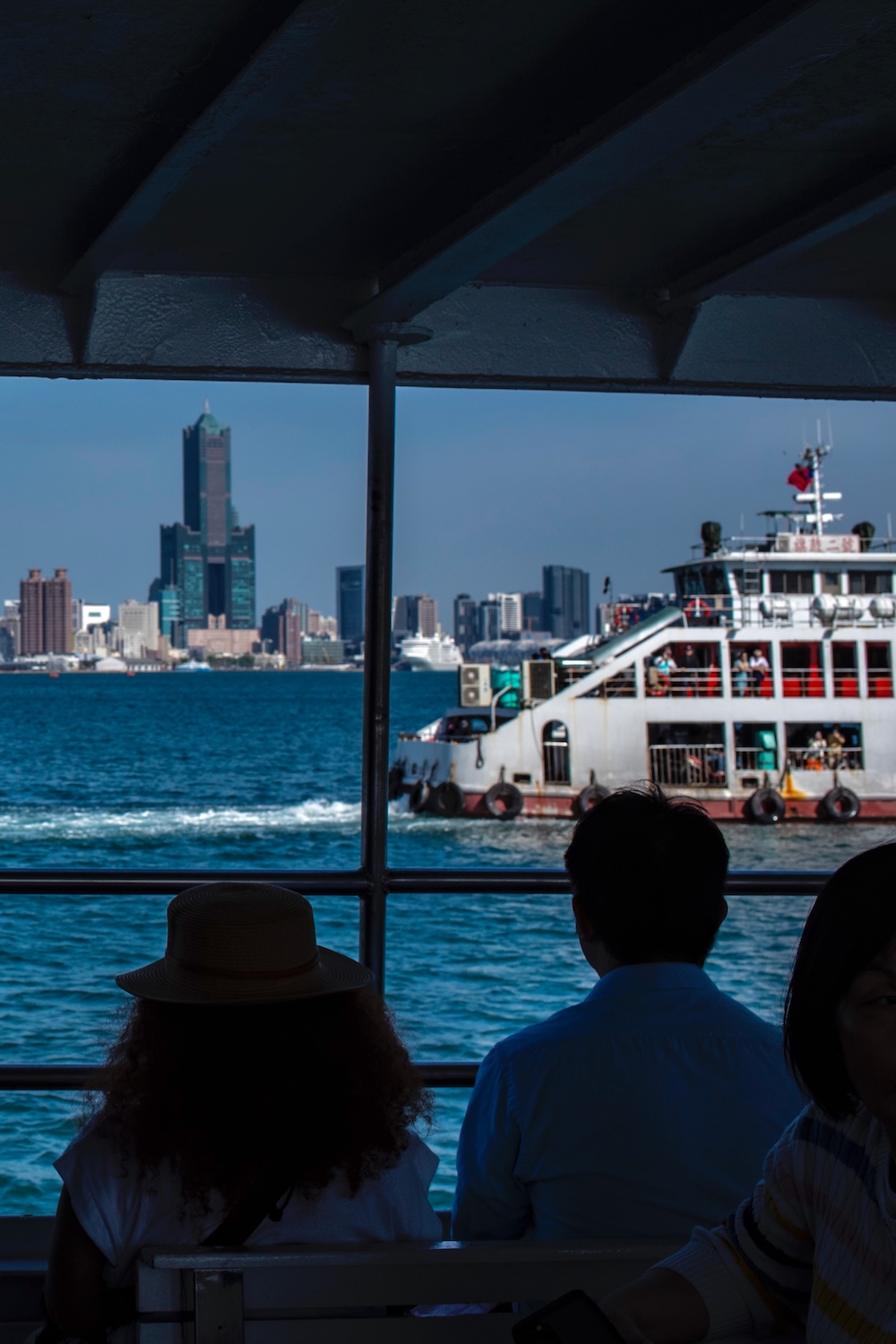
I returned to my hotel for my second meeting, then headed to Cijin Island, en route to which I had to question reality. Although I could’ve sworn the terminal station of the MRT Orange Line was called Sizihwan, it display on all signs as “Hamasen.” Even the neon one (which was obviously decades old, and maybe older than that) above the marina building itself.
At first, I honestly wondered whether a Mandela effect was at play, though a Google Maps search of tbhe word “Sizihwan” did bring up Hamasen Station. Perhaps they had simply rebranded the entire transport depot in the interim.
That was not even the most shocking thing about my trip over to the island, whose Cihou Fort offers what is without a doubt the best view of Kaohsiung’s skyline.
Rather, it was that the island—the fort; the old street; and even the famous seafood restaurant where I snacked on its famous fried oysters—was empty. It was a Wednesday during winter, I admit that. But it was almost eerie.
Back on the mainland at the Spring and Autumn Pagodas—did you think I was going to let good lighting go to waste?—I camped out at the Wuliting Pavilion as sunset time approached.
There with me were a group of friends, seemingly local schoolboys who I assume were in their mid-teens. I say “seemingly” because they were alternating between Chinese, Japanese and English, with remarkable fluency. They didn’t say a single word to me, but as they chatted amongst each other, I found their intellect so inspiring.
I wish I could tell you that the all the crescendoes that had built over the 48 hours since leaving Alishan had exploded into something, that the sunset I sat waiting for in silence for almost half an hour had been one for the record books.
Instead, the cloud wisps (the sorts that usually suggest an explosion of pink or purple) faded from blue, to white, to grey, to black, as if they sun itself had gone greyscale as it slipping beneath the horizon.
Before heading down the spiral staircase and back to water level, I looked back at the group of friends. I considered giving them a thumbs up, as the man in the wheelchair had done to me earlier, but decided against it at the last moment.
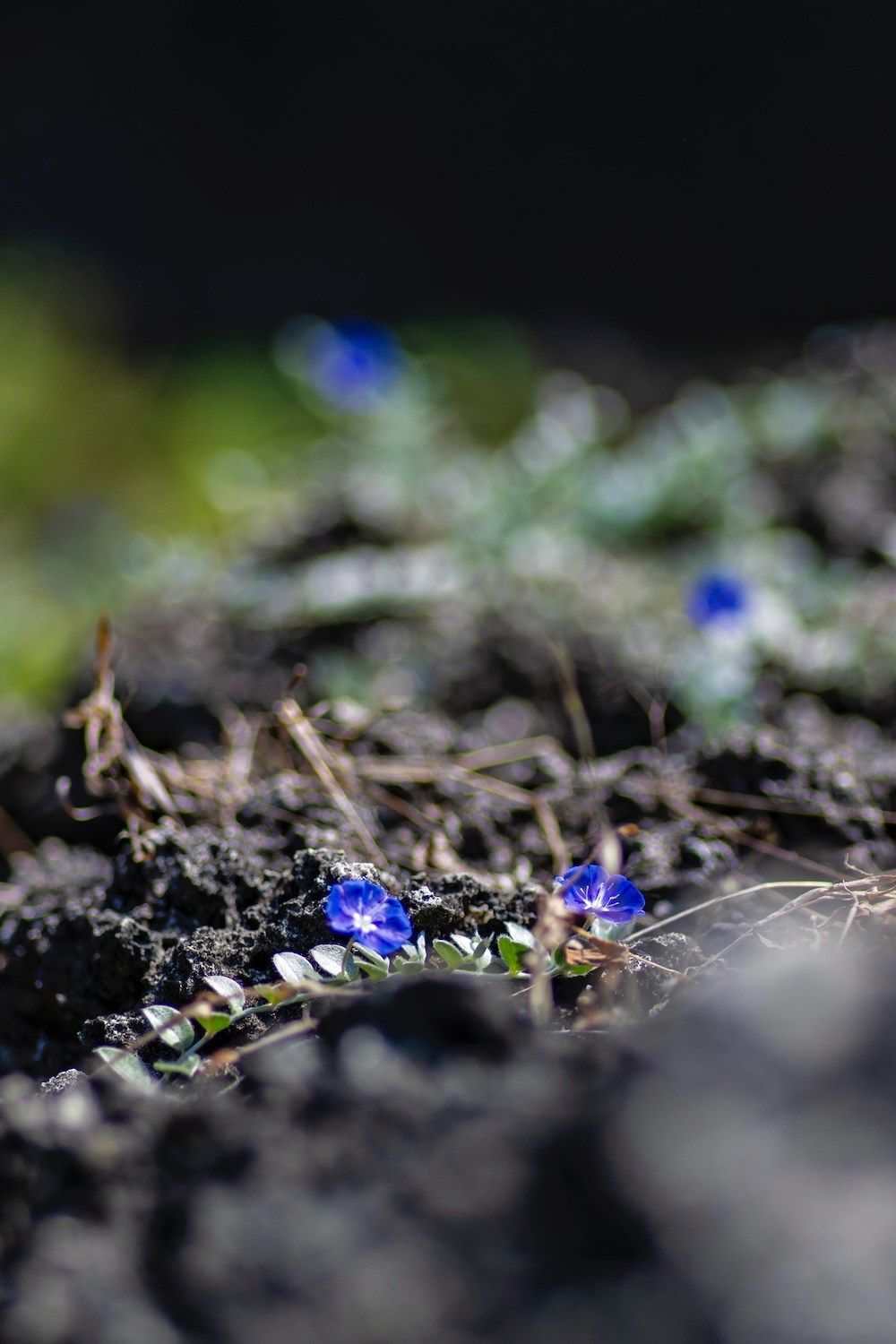
Xiaoliuqiu was the only one of Taiwan’s outlying islands I had yet to visit as of a couple of weeks ago, and so I experienced a sense of completion upon stepping off the high-speed ferry from the mainland.
I also felt a lump in my throat: Three foreboding-looking military aircraft were buzzing loudly overhead, though it was quickly clear that these were Taiwanese planes, not Chinese ones. Still, as had been the case when I lived in Taiwan, reminders of the ever-present threat of invasion never become less terrifying.
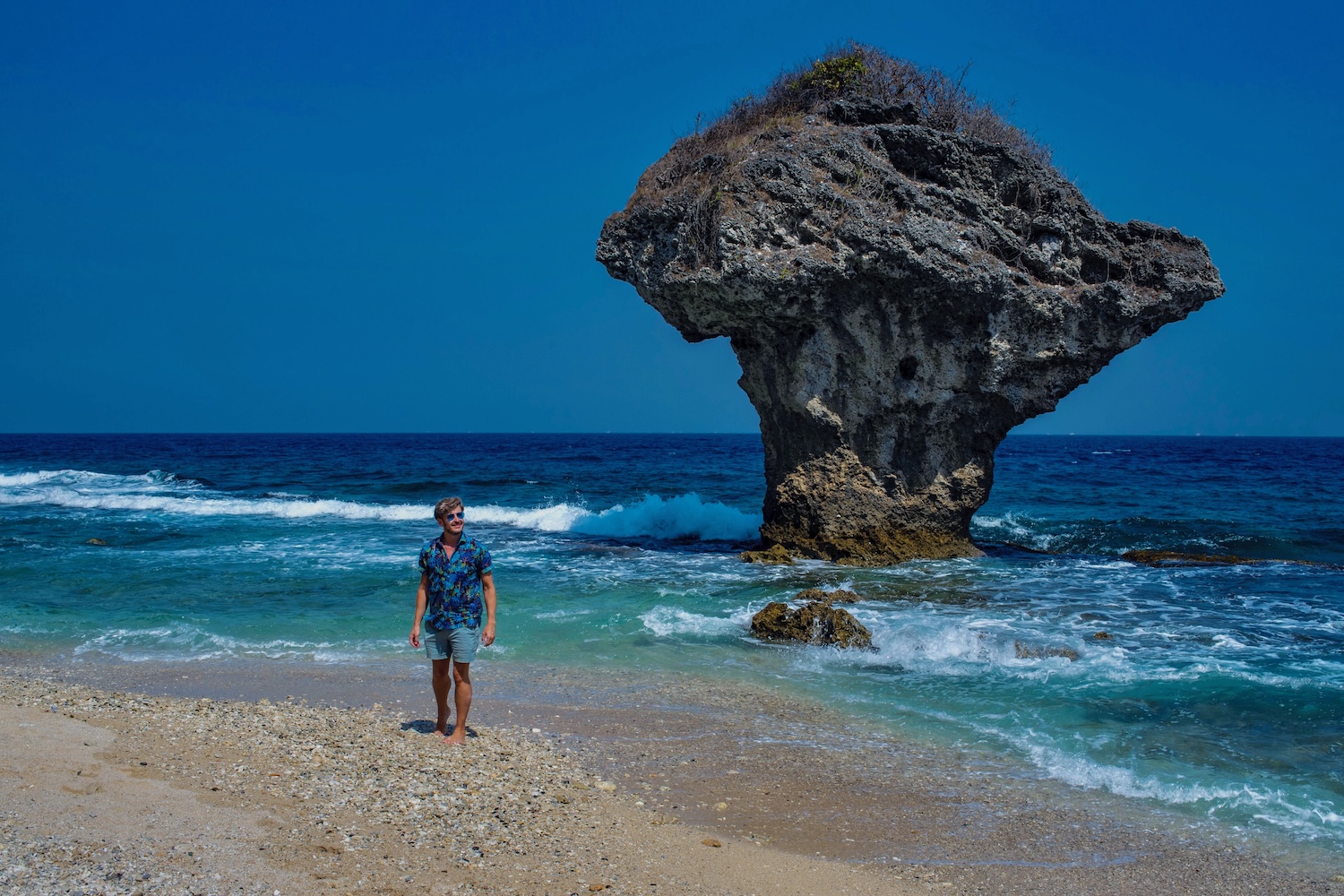
For my part, I had a full agenda. After stopping immediately at the island’s most famous attraction (Vase Rock, which to me actually looks more like a misshapen cousin of the so-called Queen’s Head near Keelung), I walked over to Lobster Cave, which is neither a cave nor (so far as I could tell) home to any lobsters.
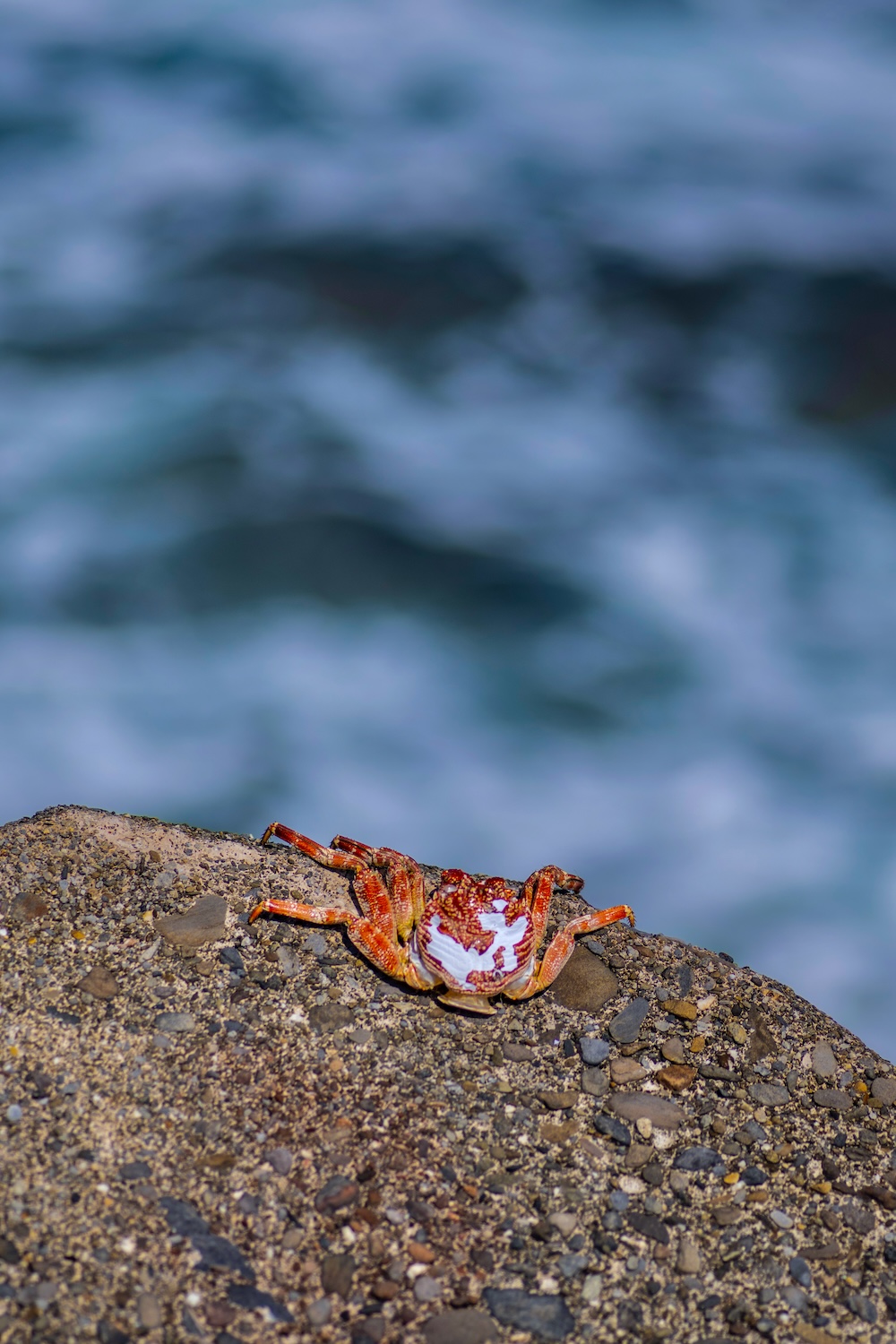
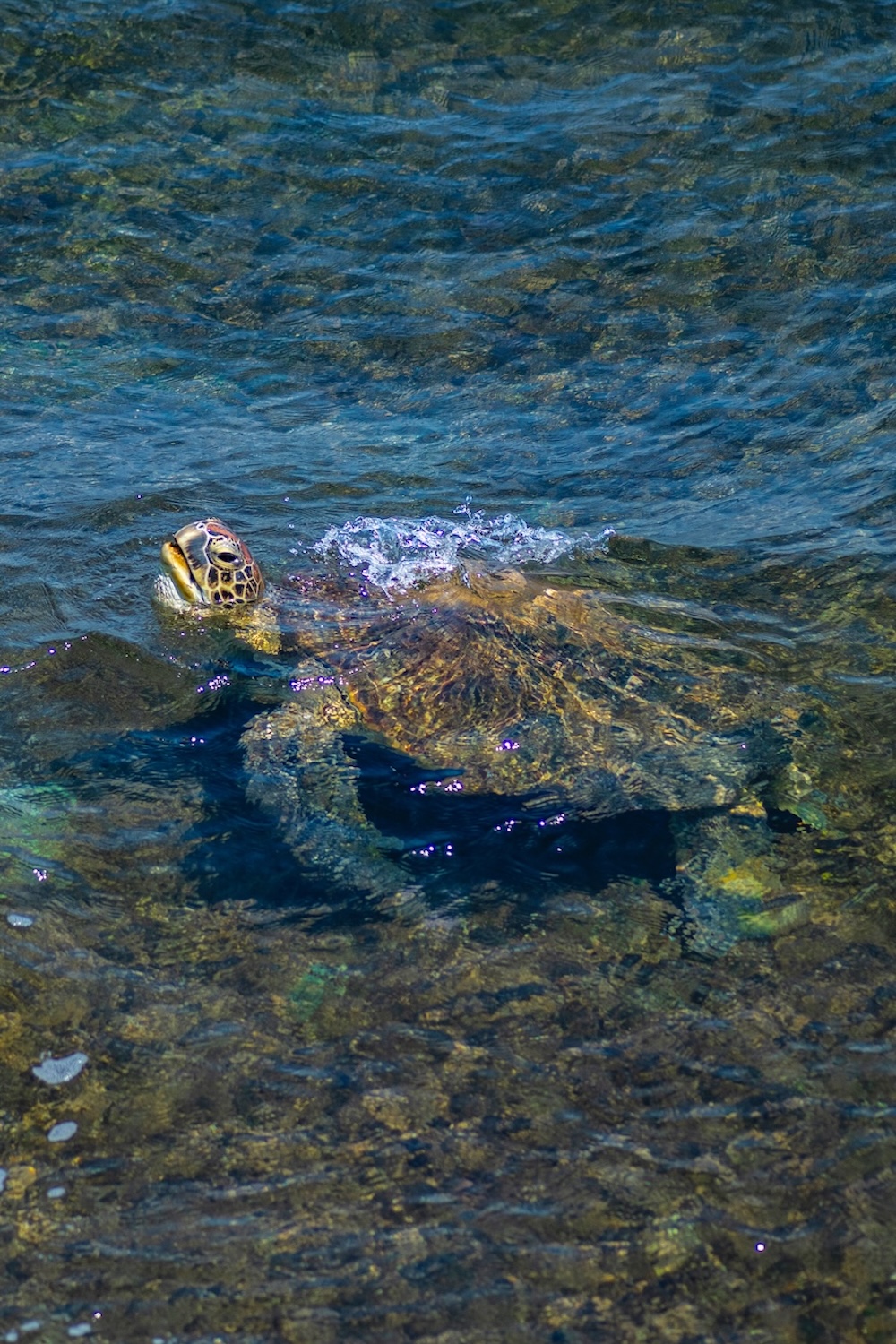
Rather, it was a spot for spotting sea turtles—and lots of them. I saw my first one within literal seconds of arrival, which gave me great confidence in this island’s widely-publicizing turtle conservation efforts.
As I stood there atop the cliff, the sharp coral that comprised it nearly piercing through my expensive flip-flops with each step, I wondered precisely why the animals chose to hang out here. The water was shallow; the waves were also rough. Did they like getting tossed around? Or did they simply not know any better?
At this point, I wanted to take advantage of the fact that I had a vehicle of sorts—an e-bike; I didn’t want to reverse my long-standing policy of not renting motorbikes—and began exploring the island. As has been the case in most of offshore Taiwan, I quickly abandoned using GPS, instead leveraging the small size and simple layout of the place to follow my own curiosity.
After visiting the Black Devil Cave, whose Chinese name actually meant “Bird Devil Cave,” I headed south (east?), where a massive old banyan tree stood atop a bluff. I found it curious how literally no one else was there, apart from a curious stray cat whom I didn’t leave unattended with my bag long enough for him to pee on it.
Not that I was complaining. Being with the tree evoked a lot of things for me—namely, a trip to the one in Maui, which was nearly destroyed shortly after I was there; and my estrangement with my mother, whom I was with when I visited the Lahaina Banyan—and it was best to be in solitude as I felt those feelings.
Coasting back down the hill (I turned off my bike’s battery, so as not to accidentally careen out of control), I felt at once disappointed and impressed by the island. On one hand, I do think I built it up in my mind a bit too much, especially after so many of my Taiwanese friends telling me how much they loved it.
On the other hand, in the span of a few hours, I’d seen basically the entire place. It had been eclectic in a way that belied its small size, and beautiful to an extent that stopped me in my tracks several times, even if its beaches didn’t quite break the curse that seems to afflict basically every stretch of sand in this island nation.
Eventually, after a bowl of strawberry snowflake ice, I headed back to a temple near the Sunset Pavilion; the temple, in my estimation, would provide a better sunset view than the pavilion itsel.
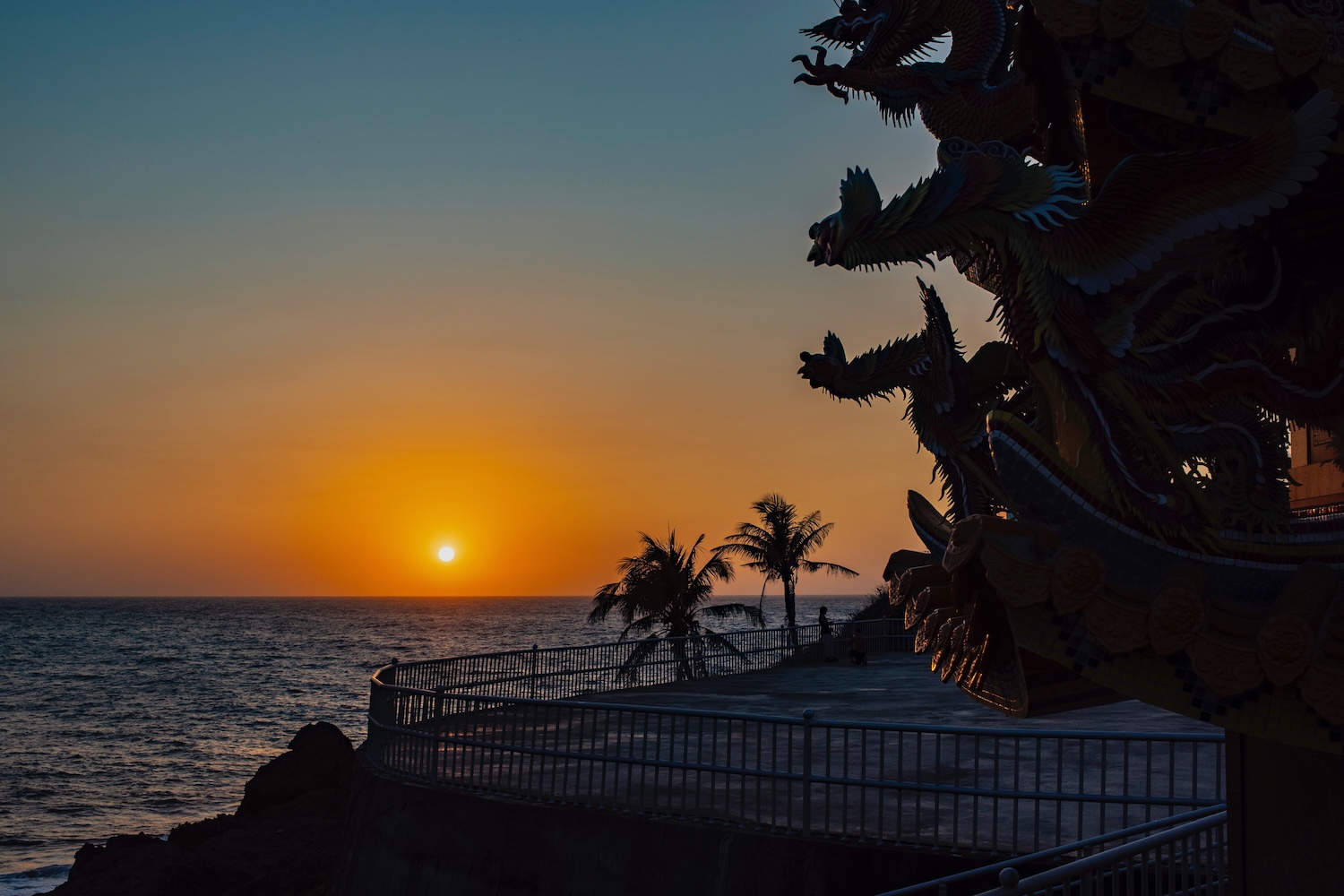
As the orange orb sunk toward the horizon, it quickly confirmed my suspicions, both the dragons that adorned the temple and the palms that swayed in the breeze just beyond it framing the end-of-day glow in the way a purpose-built viewing shelter never could.
Part of me wanted to feel annoyed by the other two people there: A pair of local dudebros skateboarding and listening to Taiwanese rap music while they flew a drone overhead to record it all.
But then I thought about the war planes from earlier in the day, and wondered how many hundreds of times (thousands, even) these very young men must’ve had to contemplate existential questions, even at their age. Joy is defiance, I reminded myself, and allowed my judgement to dissolve like the sun disappearing into the sea.
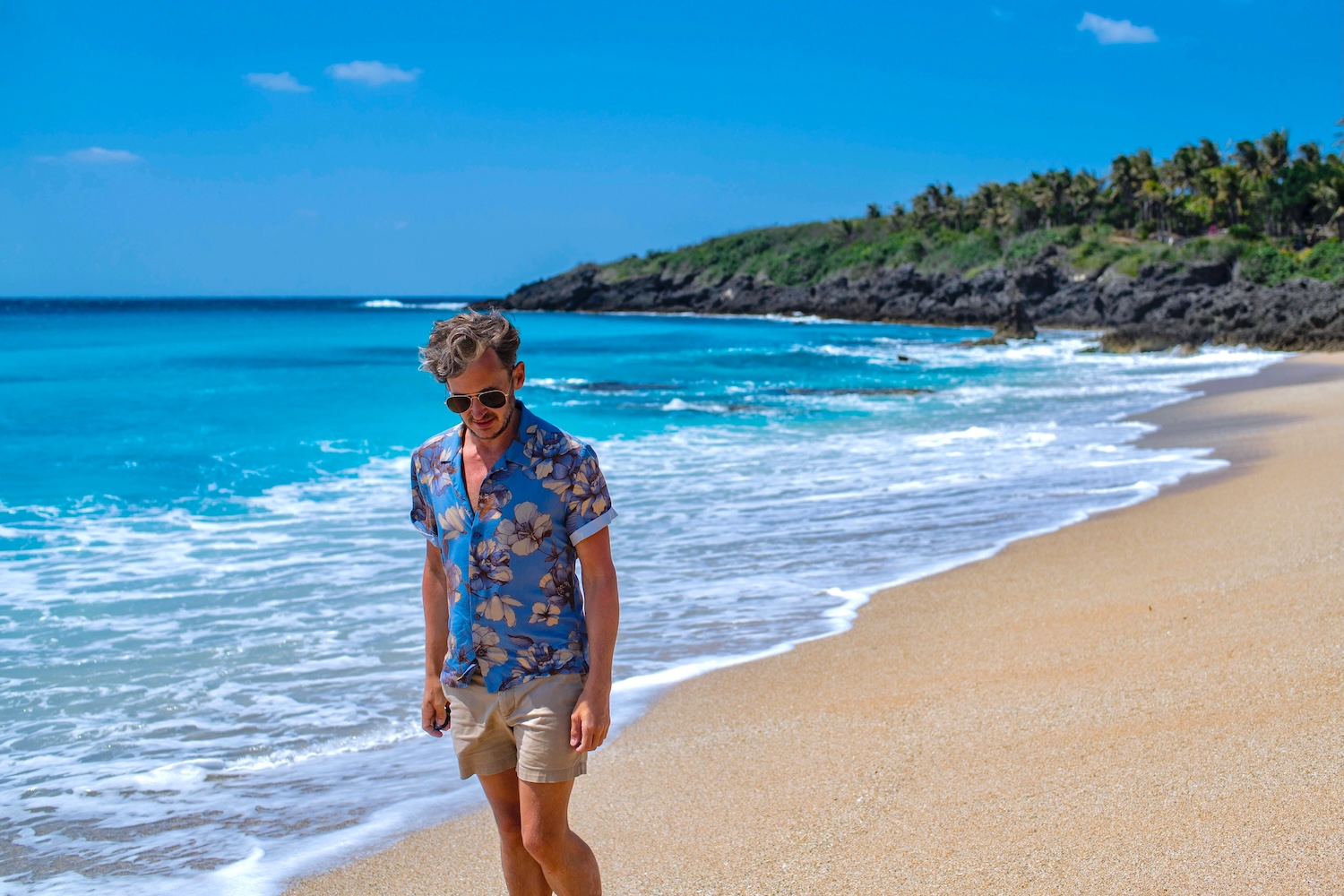
Back on the mainland, I ended my trip with an excursion down to Kenting National Park, which was so significantly better than the way I remembered it that I began to call my own judgment into question.
Which was appropriate. After all, I had come to Taiwan at this time—and for this amount of time—in part because I wanted to see whether the country actually inspired me as much as my other core destinations (Japan; Thailand), or whether my relationship was a trauma bond left over from the pandemic.
Hours before I left, looking down on a sea of EVA Air jets from Taoyuan Airport’s observation deck, a father and his infant son caught my eye. The boy was absolutely transfixed by the aircraft, his dad explaining to him (well, as best as one can explain something to a baby) what was going on.
It made me think of a day my grandmother often recounts to me. It was shortly after my sister’s birth when I was just over a year old; she and my grandfather had flown down to Houston (where my own family was living at the time) to help my parents out.
“You were just so smart,” she always says, each time just as earnest as the last, recalling not only how precisely I could identify different animals at the farm she’d push my stroller along each afternoon, but how completely the planes soaring overhead hypnotized me. “You were just so curious.”
Action, to answer the rhetorical question she’d posed all those years ago, as she sipped watered-down tea at her tiny kitchen table, is the alternative to weakness.
Continuing to watch the man and his child, I held back happy tears, but also suppressed a laugh. Had it not been for the encouragement of a large language model, I might never have been able to answer her, let alone to vindicate the decision the LLM itself inspired me to make.
It felt like an exhale.